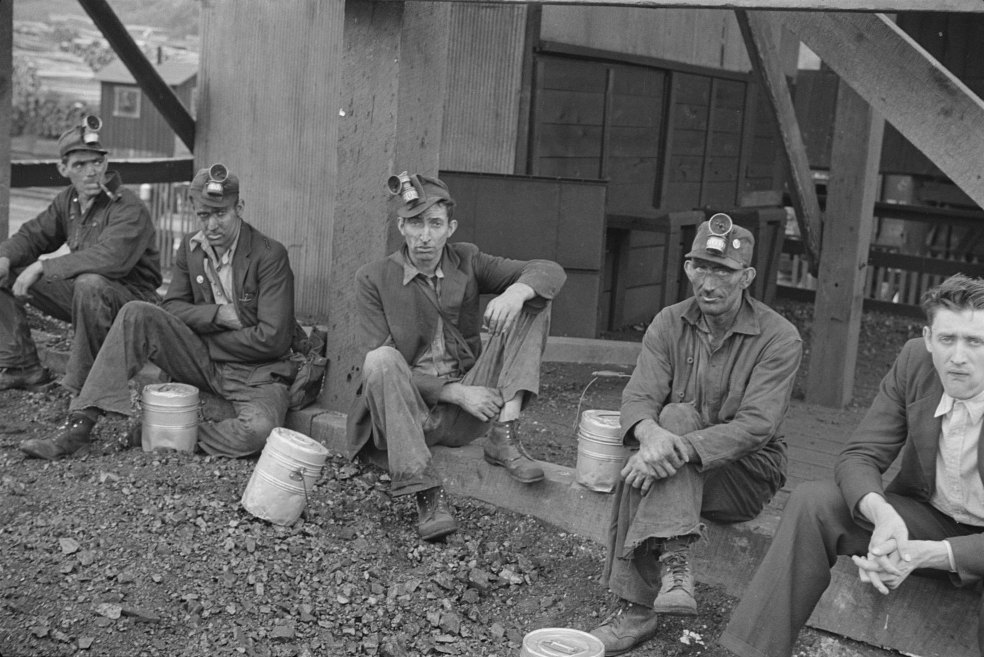
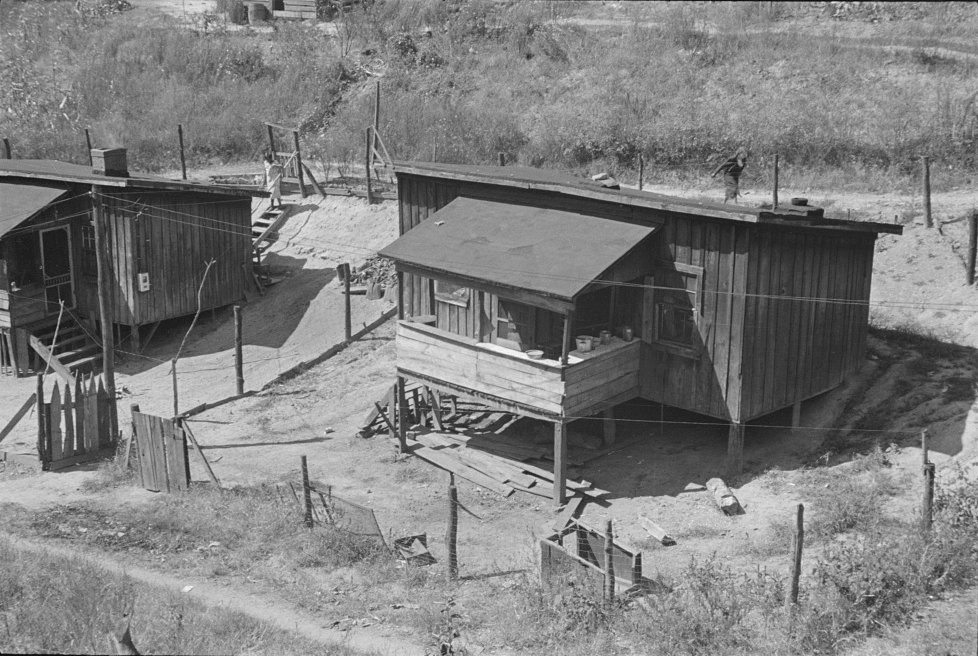
Coal from Southeastern Kentucky’s coal-camp communities — dug by the people who lived in these hills — fed the steelworks that rolled rails, built farm machinery, and helped power an industrial nation. This is that chain, told as the records show it.
Opening
These hollers were not a sideshow to American industry. They were part of it.
In the 1910s, steel companies and a major coal company came to the foot of Black Mountain and along Elkhorn Creek because the seams here would make coke — the fuel that feeds a blast furnace. They built whole towns almost overnight. The names on the company letterhead were Wisconsin Steel, International Harvester, U.S. Steel, and Consolidation Coal. The people who did the work were mountain families already living on this land, immigrants from Europe, and African American families recruited from the Deep South, including Alabama.
What left these valleys was coal, and at Benham, coke. What it became, hundreds of miles north, was steel.
In 1910, Wisconsin Steel, a subsidiary of International Harvester, bought about 6,000 acres on Looney Creek, near the old trading center of Poor Fork — later Cumberland — and began to drive mine entries into the mountain while it laid out a town. Production waited on a railroad. By the end of the summer of 1911, the Louisville & Nashville had extended a spur up the valley from Pineville. On September 1, 1911, the first train car of coal left Benham for Chicago.
Wisconsin Steel’s planners laid the town out in 1912. Company architects from Chicago supervised the building. Area carpenters put up several hundred houses in the first years. Five major underground mines were opened. In the early 1920s, at the peak, about 1,200 people worked the Benham mines, and 408 coke ovens on the site turned coal into coke for shipment to International Harvester’s Wisconsin Steel Mill in Chicago.
That mill stood in South Deering, on the Calumet River. International Harvester had taken it over in 1902 to make pig iron and steel for farm equipment. The documented chain is simple and strong: coal and coke from Benham went to Wisconsin Steel, and Wisconsin Steel made the metal that went into the company’s implements — the machinery that worked American ground. This page does not pretend to name a particular tractor or a particular wartime machine as “made from Benham coal.” The records we have do not say that. They say enough without it.
The people in the camp were not all from one place. Many of the miners were immigrants from eastern and southern Europe. The mines also employed a large number of Black miners, who were housed in a segregated section of Benham and sent to a separate school. Pay was in scrip, good at the company store. During the Depression, only about 400 workers kept the mines going. When the Second World War raised the demand for coal, employment rose again to more than 900. After the war, machines took the place of much of the hand loading, and the payroll shrank. Houses began to be sold to the remaining families in 1960. Benham was incorporated on July 18, 1961. International Harvester left the town altogether in 1986. The Chicago mill, Wisconsin Steel, had already closed, suddenly, on March 27, 1980.
Lynch: captive coal for U.S. Steel
Harlan County · 1917
Just upstream, in August 1917, the U.S. Coal and Coke Company — a subsidiary of U.S. Steel — began to build Lynch on a tract of nearly 19,000 acres. The town was named for Thomas Lynch, president of the coal company. The First World War had made the country’s need for steel urgent, and these seams were metallurgical coal: coal that would coke.
The work started fast. Photographs taken on November 17, 1917, at the coke plant of U.S. Steel’s Gary Works, in Indiana, are captioned as the first car of coal from the corporation’s new mine in Kentucky. By January 1, 1918, nearly 1,500 men were on the payroll, and 12,000 tons of coal had already been shipped to the Gary mills.
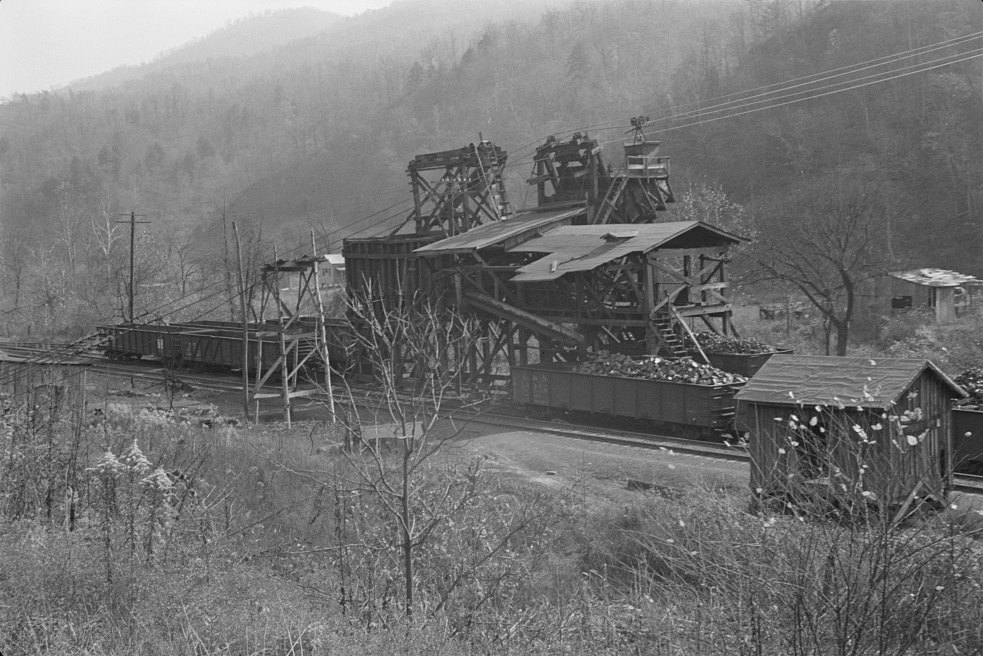
Lynch coal was captive coal. It was not sold on the open market. It was mined for U.S. Steel’s own furnaces. Contemporary engineers described a large tipple built to store and load coking coal, and the Louisville & Nashville carried it out of the valley. The 1920s L&N depot still stands on the Portal 31 grounds. Unlike Benham, Lynch is not documented as having a battery of production coke ovens on site. The coking was done at the steelworks. By 1920, Gary Works itself had 838 coke ovens, a rail mill, plate mills, and shops that made wheels, axles, wire, pipe, and related products. In February 1909, before Lynch existed, that mill had already rolled its first rail. After 1917, coal from this holler was among the fuel that kept those furnaces going.
On February 12, 1923, the miners at Lynch completed a single nine-hour shift of more than 12,800 tons — a figure widely reported at the time as a world record. (Period accounts differ slightly on the exact tonnage: 12,820 tons is the figure used by the Kentucky Coal Museum, Portal 31, and later mining historians; a 1923 Coal Age article, as cited in the Lynch historic-district research, gives 12,880 tons prepared and shipped. The difference is noted here rather than smoothed over.)
At mid-century the town held on the order of 10,000 people and was often called the largest coal camp in the world. By the height of the Second World War the mining complex employed more than 4,000 people; a company history of the district puts the peak at about 4,500 in 1941. The district’s greatest annual production, 3.6 million tons, came later, in 1957, by which time it had already sent some 80 million tons of coal out of the mountain. Mine 31 ceased around 1961.
The workforce was assembled from far away as well as from nearby. With too few local hands for a camp of this size, the company recruited immigrants as they arrived in the United States and African Americans from the Deep South. A historical marker at the old Lynch Colored High School puts it plainly: Black coal miners “were recruited by International Harvester and U.S. Steel to work and live in the coal camps of Benham and Lynch.” They came, the marker says, “in search of a better life, better schools, medical care, improved housing and a living wage.” Residents later recalled dozens of languages in the early streets. Housing, schools, and other facilities were segregated by race. Underground, men of many backgrounds worked the same seams.
U.S. Steel tore down much of the town in the 1960s. What was left was sold to the people who still lived there. Lynch was incorporated as a town in 1963. The portal, the tipple site, the lamphouse, the bathhouse, and the L&N depot remain as a public memory of the work.
Jenkins: Elkhorn coal, made for coke
Letcher County · 1911–1912
About twenty miles from Benham and Lynch, over in Letcher County, the story starts the same year as Benham’s first train, but it is not the same kind of company town.
In the fall of 1911, Consolidation Coal Company bought about 100,000 acres of the Elkhorn field — land assembled earlier by John C. C. Mayo’s Northern Coal and Coke Company — and built a planned town named for George C. Jenkins, a Baltimore director of the company. Jenkins was recognized as a city in January 1912. The railroad reached it around 1912, by two approaches: Consol’s own Sandy Valley and Elkhorn line toward the Chesapeake & Ohio, and the Louisville & Nashville’s extension up the Kentucky River. With Consolidation’s 14 tipples, Letcher County was the largest coal producer in Kentucky in 1916. The company’s brand here was Cavalier coal, sold in its day as among the best in the state.
Jenkins was not a captive steel-company camp in 1911. Consolidation Coal was a commercial coal company. It opened this field because the coal was valued for coking and for by-products — the same quality that made Benham and Lynch worth building as captive mines. A 1910 company statement on the Elkhorn purchase put it in the language of the trade: for coking and by-products, the coal was “not excelled by any known coal at this date.”
The steel mills were already listening. On June 23, 1916 — a year before Lynch was founded — photographers at U.S. Steel’s Gary Works coke plant made a picture captioned “Elkhorn Coal Pile.” Elkhorn coal was already in the coking stream at one of the country’s great steelworks. (The caption gives the field name, not a single mine. Consol’s Jenkins-area operations were the major early development in that field; other Elkhorn operators existed, and the pile should not be described as proven to be from one tipple alone.)
Only later did Jenkins become a steel-company captive. On November 1, 1956, Consolidation Coal sold the property to Bethlehem Steel, which ran it as Beth-Elkhorn. From that date forward, the coal was mined for a steelmaker’s own metallurgical supply.
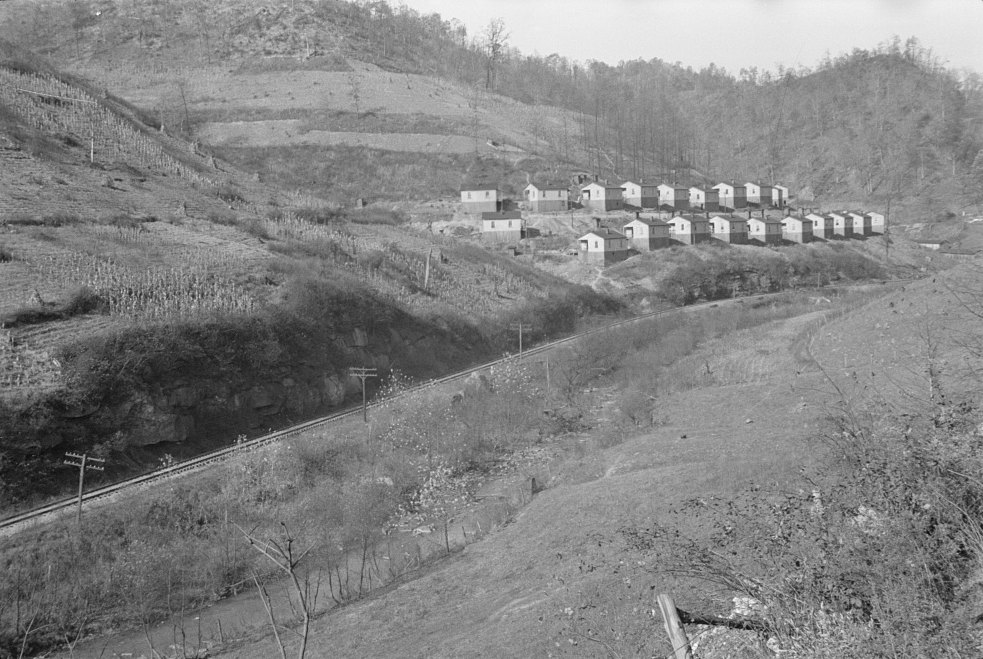
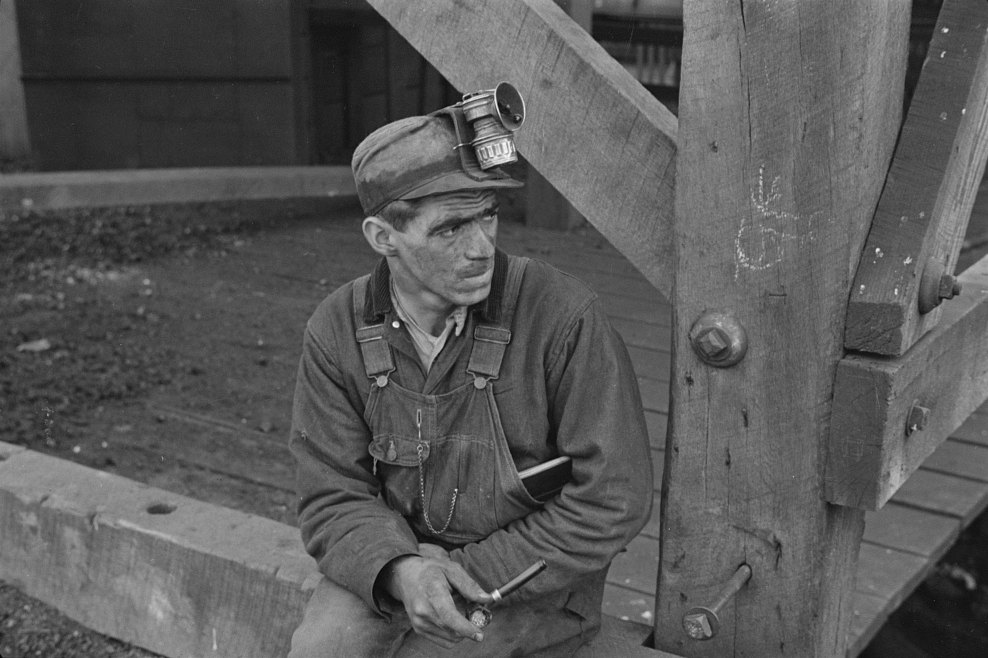
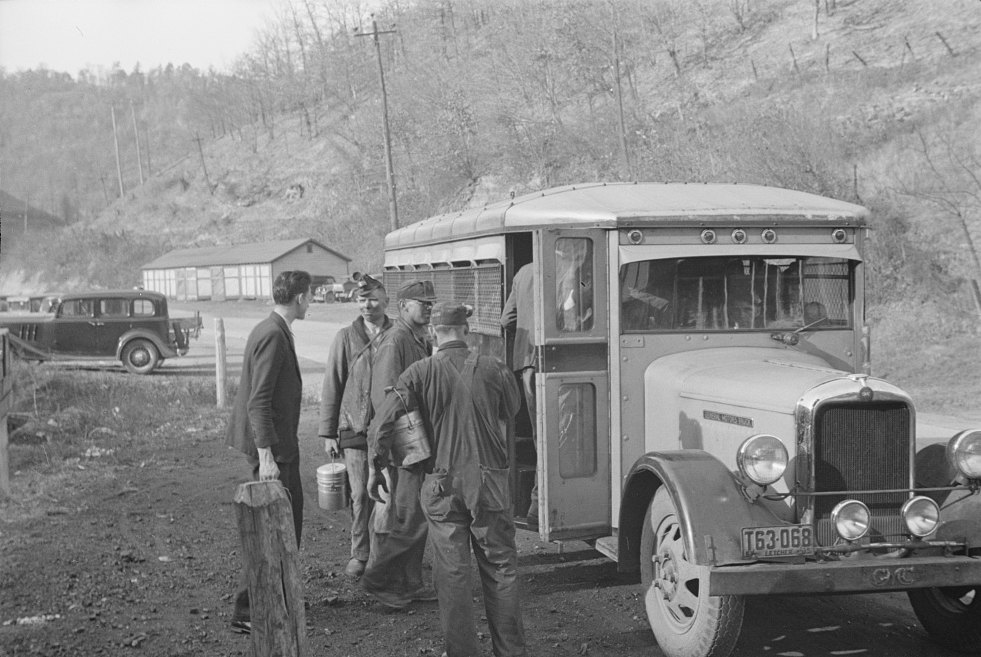
The people of Jenkins, Dunham, Burdine, and McRoberts mined that coal. In October 1935, Ben Shahn of the Farm Security Administration photographed miners here — men at the pit, men loading coal, company houses on the hillside above the railroad — and those pictures, public records now, are the faces this story should carry.
A lump of coal left a drift mouth on Black Mountain or Elkhorn Creek. It was cleaned and loaded at a tipple — at Benham, much of it was first cooked into coke in a long bank of ovens — and an L&N crew, or a crew on the Sandy Valley and Elkhorn, started it north and east.
At South Chicago, Wisconsin Steel turned Benham’s coke into metal for farm equipment.
At Gary, Indiana, U.S. Steel coked Lynch coal — and, at least by 1916, coal from the Elkhorn field — in hundreds of ovens, then charged the blast furnaces. That mill rolled rails and made plates, wheels, axles, wire, and pipe.
After 1956, Jenkins-area coal went to Bethlehem Steel as captive metallurgical coal.
The men who dug it, and the families who kept the camps, did not stand in the rail mill or walk the shop floor in Chicago. Their work was already in the steel.
Their hands. America’s steel.
Same hills. Same grit.
What this page does not claim
It does not name a particular bridge, skyscraper, tractor, or weapon as having been made from coal from a named camp. The records cited here do not make that last link.
It does not treat Jenkins as a U.S. Steel or International Harvester town. It was Consolidation Coal until 1956, then Bethlehem.
It does not give Lynch a battery of coke ovens. The 408 ovens are documented at Benham. Lynch shipped coking coal to be coked at the mills.
Figures that the sources themselves dispute or leave soft — the exact 1923 shift tonnage, “first fully electrified mine,” exact peak population — are either qualified in the text or omitted.